
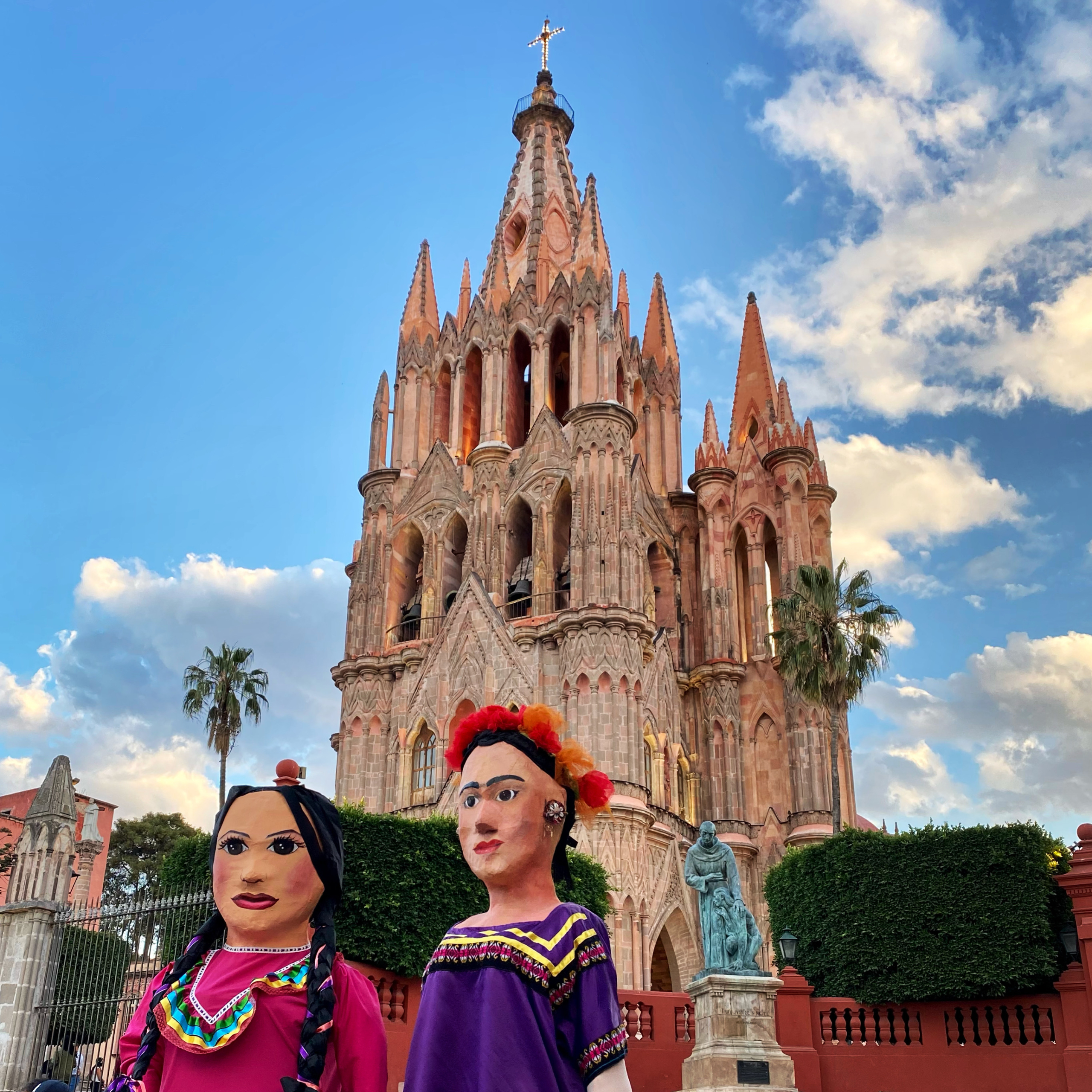
Towering, whimsical, and impossible to ignore, mojigangas are one of the most enchanting traditions in San Miguel de Allende. These oversized papier-mâché figures don’t just entertain—they tell stories, celebrate love, and animate the city’s streets with color, rhythm, and pure joy. If you’re searching for authentic Mexican festivals, San Miguel de Allende traditions, or iconic cultural experiences in Guanajuato, this is where the magic begins.
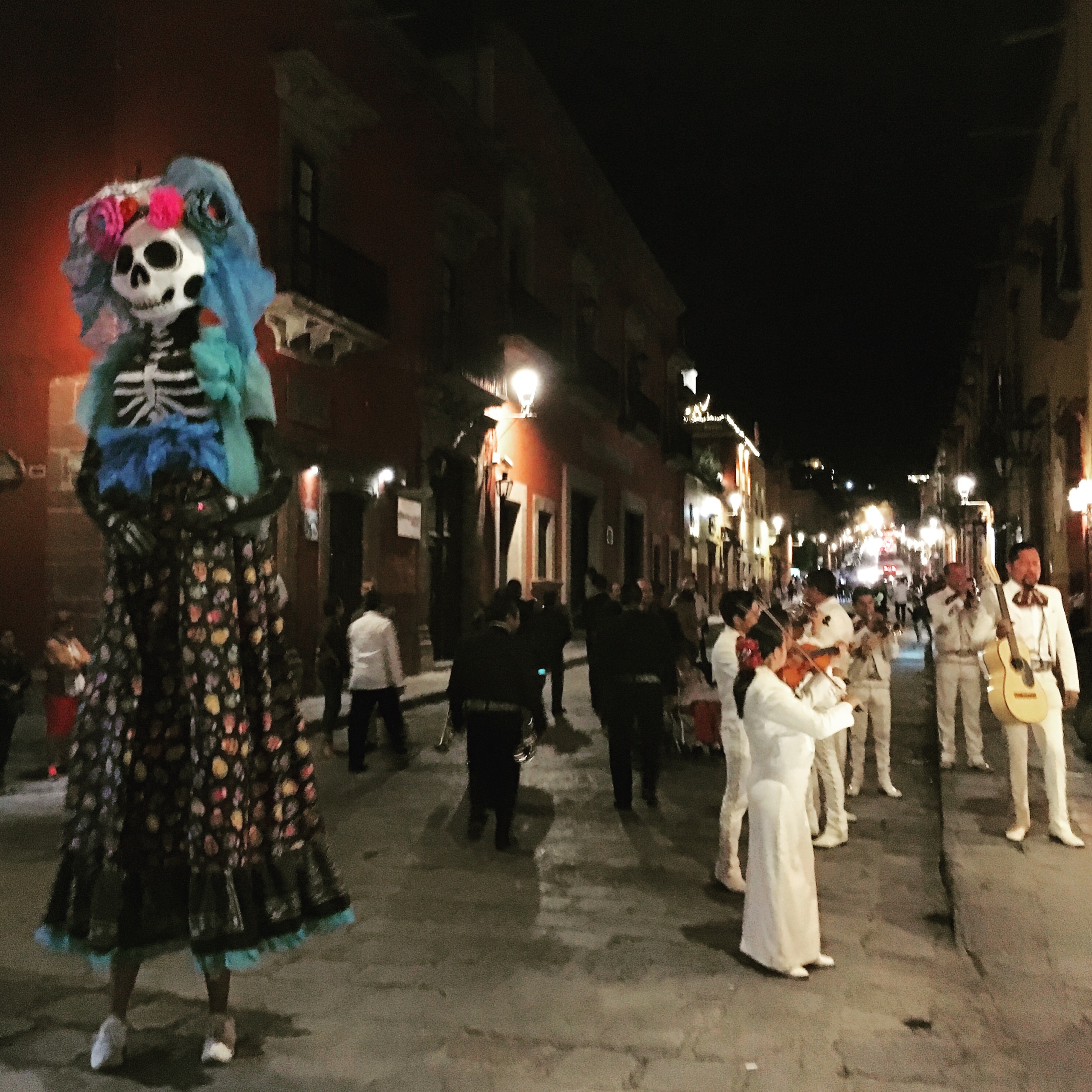
What Are Mojigangas? Mexico’s Larger-Than-Life Icons
Mojigangas are giant puppets, often reaching 3–4 meters tall, crafted from papier-mâché, fabric, and lightweight frames. Carried and danced by a person inside, they sway, spin, and flirt with the crowd—always accompanied by live music.
Their exaggerated expressions and bold costumes make them instantly recognizable, and in San Miguel de Allende, they’ve become a symbol of celebration, community, and tradition.
Why Mojigangas Matter in San Miguel de Allende
In this UNESCO-recognized city, mojigangas are more than visual spectacle—they are woven into the emotional fabric of local life. You’ll most often see them during:
- Traditional weddings – leading joyful wedding processions through the streets
- Patron saint celebrations – especially neighborhood fiestas
- Cultural parades and festivals – marking religious and civic events
These performances turn ordinary streets into moving stages, reinforcing why San Miguel is considered one of Mexico’s most culturally rich destinations.
Colonia Guadalupe: The Heart of Mojiganga Culture
While mojigangas appear throughout the city, Colonia Guadalupe is their spiritual home. Known for its murals, art studios, and creative energy, this neighborhood is where many mojiganga artisans live and work.
Walk these streets and you may spot towering figures mid-construction or catch a spontaneous rehearsal. For visitors interested in street art, folk traditions, and local craftsmanship, Colonia Guadalupe is essential.
The Art Behind the Giants: How Mojigangas Are Made
Creating a mojiganga is a labor of love and skill:
- Lightweight frame construction for mobility
- Papier-mâché sculpting to shape expressive faces
- Hand-painted details that bring personality to life
- Custom costumes reflecting tradition, humor, or modern themes
Each piece is handmade, often commissioned for a specific wedding or celebration, making no two mojigangas exactly alike.
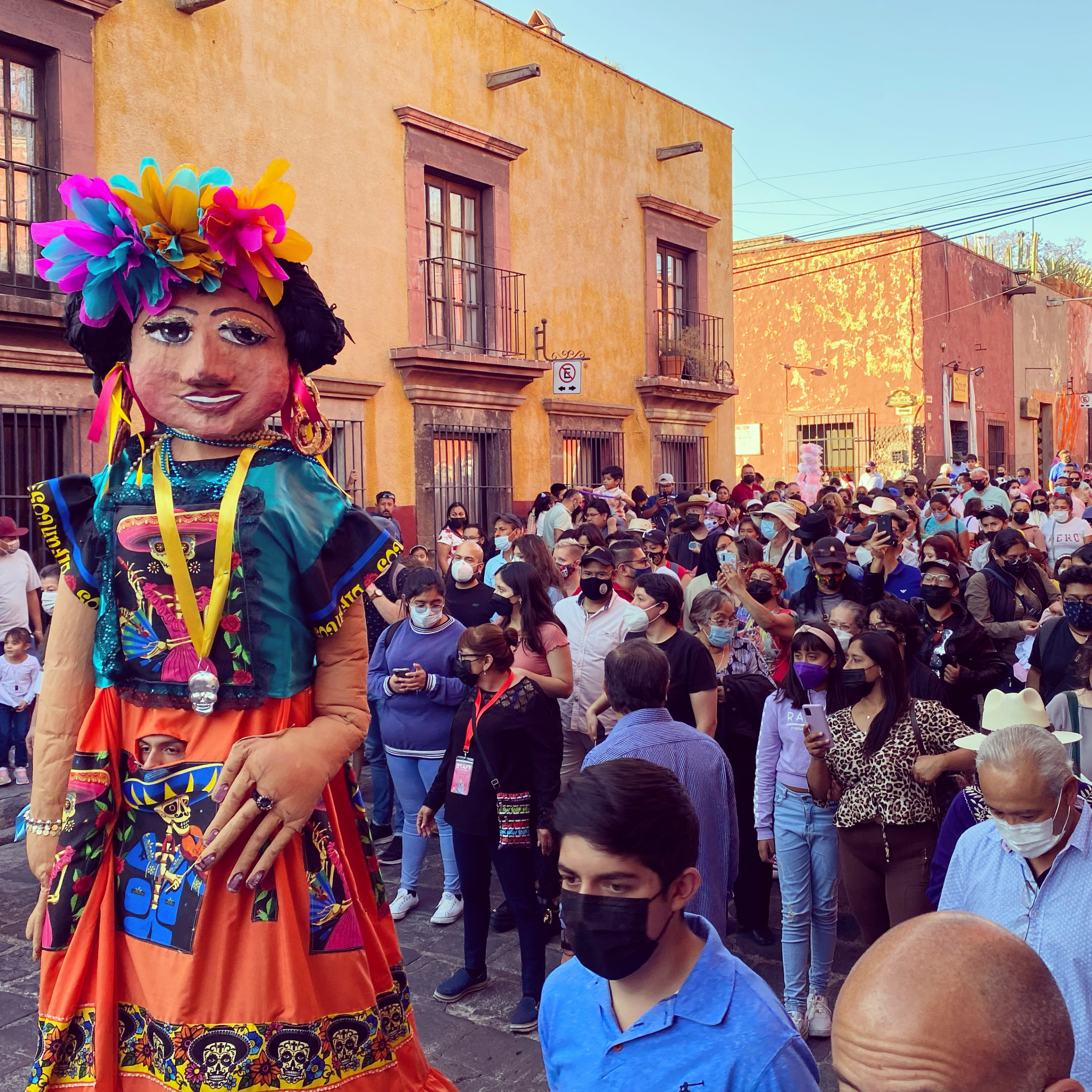
When and Where to See Mojigangas Today
You don’t need a ticket or tour—just good timing and curiosity. Mojigangas most frequently appear:
- On weekends, especially Friday–Sunday afternoons
- During wedding season (spring and fall)
- Around Centro Histórico and Colonia Guadalupe
Follow the sound of brass bands or tambourines—you’ll know you’re close.
Why Visitors Fall in Love With Mojigangas
Mojigangas capture everything people adore about San Miguel de Allende:
✨ artistic soul
✨ deep-rooted tradition
✨ spontaneous joy
✨ community celebration
For travelers, photographers, and future homeowners alike, witnessing a mojiganga procession feels like stepping into a living painting.
Living Where Traditions Come Alive
As a real estate professional in San Miguel de Allende, I always tell clients that culture is part of the lifestyle here. Mojigangas aren’t staged performances—they’re real moments, happening in real neighborhoods, among people who care deeply about their heritage.
If you’re dreaming of a home where traditions still spill into the streets and celebrations feel personal, San Miguel offers something truly rare.
Searching for more cultural guides, neighborhood insights, or lifestyle inspiration in San Miguel de Allende?
Explore more local stories—and discover where history, art, and everyday life beautifully collide.


Join The Discussion